

Why Video based learning is better for complex topics
By: Fred, but mainly Emma :-)
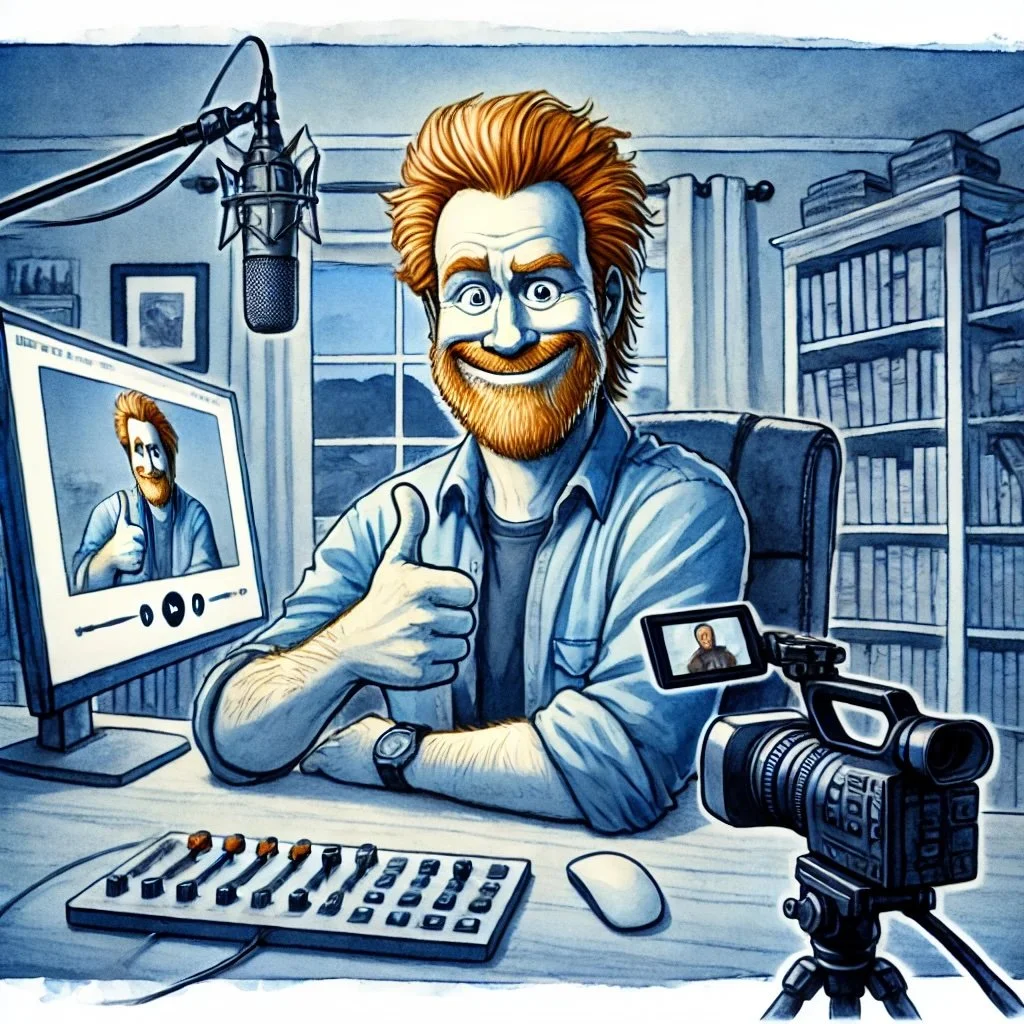
Why I have a face for radio, but do video?
Let's face it, I'm not exactly Hollywood material. But despite my "face for radio," I've thrown myself headfirst into video content creation for my online training courses. Why? Because most of us respond better to video, plain and simple.
Think about it: When was the last time you read a book versus the last time you watched something on a screen? If you're like most people, the screen time probably wins out. There's a reason Google shelled out a cool $1.65 billion for YouTube back in 2006. They knew what we're all coming to realize: about 70% of consumers would rather watch a video than read about a topic.
Here's a real-world example. Say you need to learn a new knot or splice for your boat. Are you reaching for a dusty old manual, or are you pulling up a quick YouTube tutorial? I know which one I'd choose every time.
Don't get me wrong, books are great for a lot of things. Nothing beats curling up with a good novel. But when it comes to learning complex subjects? Video takes the cake. I firmly believe I could teach you more about the ColRegs (collision regulations) in 3 hours of video than you'd learn from a month of reading MSN 1781.
Now, if you've ever created content, you know it's not a walk in the park. (Trust me, my receding hairline can attest to that!) One hour of video typically involves about 12 hours of creation, 4 hours of recording, and another 12 hours of editing. It would be so much easier to slap together a PowerPoint and call it a day. But I know video works, and that's why I put in the extra effort.
I'll admit, sometimes I want to cry when I hear about a new yacht code coming out. But I'm lucky enough to do this full-time and have my own recording setup, so I can make changes fast.
One of the biggest advantages of video is that it allows for self-paced learning. You can watch at your own speed, pause when you need to, rewind to catch something you missed, and review as often as necessary. This flexibility is invaluable when you're grappling with complex topics.
I know my videos can be long at times, but there's a good reason for that. The syllabus we cover is extensive, and when it comes to passing your oral exam, you can't leave anything to chance. Every detail matters. However, I'm always looking to improve based on feedback. After doing this for ten years and listening to my students, I've started creating shorter, more focused videos. It's all about finding that sweet spot between comprehensive coverage and digestible content.
Of course, video isn't the only tool in my belt. I still believe that a multi-media approach is the best way to learn. That's why my online courses include text, audio, images, video, and interactive content. But time and time again, video emerges as the standout winner for learning.
So, while I might not be winning any beauty contests anytime soon, I'll keep putting my face out there on video. Because at the end of the day, it's not about how I look – it's about helping you learn in the most effective way possible. And if that means embracing my "face for radio" on camera, then so be it!
