

Why motivation isn’t the problem (and what helped me realise that)
By: Fred, but mainly Emma :-)
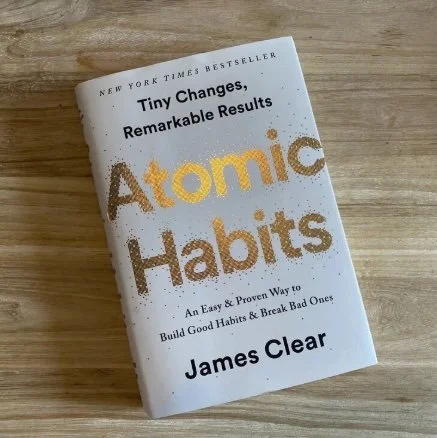
Last night I was listening to a podcast — Diary of a CEO — with guest James Clear, the author of Atomic Habits.
(It’s a great book, by the way.)
One point really stood out:
Motivation comes and goes.
Small habits and systems are what actually get results.
My students often talk about motivation — it’s not that they don’t want to study, it’s that staying motivated is hard when there’s so much to learn.
That’s why I thought this was worth sharing.
What Atomic Habits is about
Atomic Habits isn’t about overnight change or sudden breakthroughs.
The word atomic doesn’t mean “big” — it means tiny.
Small actions, done consistently, compound over time. On their own they don’t look impressive, but together they create real change.
James Clear sums it up well:
“You don’t rise to the level of your goals — you fall to the level of your systems.”
(And you know how I love a system!)
The book is built around four core ideas. Each one is explored across multiple chapters — these are the ones that stood out to me.
Core idea ❶: Focus on systems, not goals
Goals tell you where you want to go.
Systems determine whether you actually get there.
Real-life example:
Two people decide they want to get fitter.
One sets a goal: “I want to be fit.”
The other builds a system: gym bag packed the night before, same class every Tuesday and Thursday, no decision to make.
Same goal. Very different outcome.
Studying example:
One sets a goal: “I need to study more.”
The other builds a system: a set study area, the same time each day, one topic per day, no decisions to make.
Clear’s point is simple:
Goals are about outcomes
Systems are about what you do day to day
If you rely on motivation, progress is hit-and-miss.
If you rely on a system, progress becomes routine.
Core idea ❷: Make habits obvious and easy
Most people don’t fail because they lack willpower.
They fail because the habit feels too big to start.
Real-life example:
Someone wants to start reading more.
They aim to read for an hour every night → it rarely happens.
They decide to read two pages before bed → it happens almost every night.
Studying example:
One crew member plans a long study session after a full day onboard → it rarely happens.
Another reviews one small topic or answers a few questions out loud → it happens most days.
The habit doesn’t work because it’s impressive.
It works because it’s easy.
Clear repeatedly shows that lowering the barrier to starting is often the difference between success and failure.
Core idea ❸: Environment beats discipline
We like to think success comes from self-control.
In reality, we’re heavily influenced by what’s around us.
Real-life example:
If a bowl of fruit is on the bench, people eat more fruit.
If biscuits are on the bench, people eat more biscuits.
No motivation required — just proximity.
Studying example:
If notes are buried on a laptop or in a bag that's hard to get to, studying gets put off.
If notes are open on the desk or a question list is visible, studying happens almost without thinking.
Clear explains that good habits stick when the environment supports them.
Bad habits persist when they’re convenient.
The goal isn’t to be stronger.
It’s to make the right choice the easiest one.
Core idea ❹: Identity shapes behaviour
This is one of the most powerful ideas in the book.
Instead of asking:
“What do I want to achieve?”
Clear suggests asking:
“Who do I want to become?”
Real-life example:
There’s a difference between saying:
“I’m trying to quit smoking”
“I’m not a smoker”
The second statement reinforces identity.
Studying example:
“I’m hoping to pass my oral.”
“I’m preparing to pass my oral.”
Every small action is a vote for the person you believe you are.
You don’t need perfection — just consistency.
Over time, behaviour shapes identity, and identity reinforces behaviour.
Why this book is worth reading
What I like about Atomic Habits is that it focuses on small, realistic changes rather than big promises.
If these ideas resonate, I’d recommend reading the whole book — it goes into far more detail and offers plenty of practical examples.
(If you’re lazy, at least listen to the podcast!)
It might be the spark that helps you get started and begin building small (atomic) habits that actually stick.
